
House of Thistle: A Renovation Guided by Function and Flow
The House of Thistle project began after years of thoughtful but incremental changes that never quite added up. Furniture had been replaced more than once, and paint colors were adjusted in an effort to create cohesion, yet the home continued to feel unsettled. Each change addressed a surface-level issue, but none resolved how the space functioned as a whole.
When the homeowners reached out, they were not looking for another refresh. They wanted clarity, because continuing to redesign the same spaces had become both expensive and exhausting. Their goal was to make decisions that would support how they lived and allow the home to feel complete rather than perpetually in progress.
This was a project that required both renovation and furnishings. The challenges were rooted in layout, lighting, circulation, and scale, which meant they could not be solved through furniture alone. Our role was to step back, establish a clear sequence of decisions, and guide the process so each choice supported the next.
Reframing How the Home Needed to Function
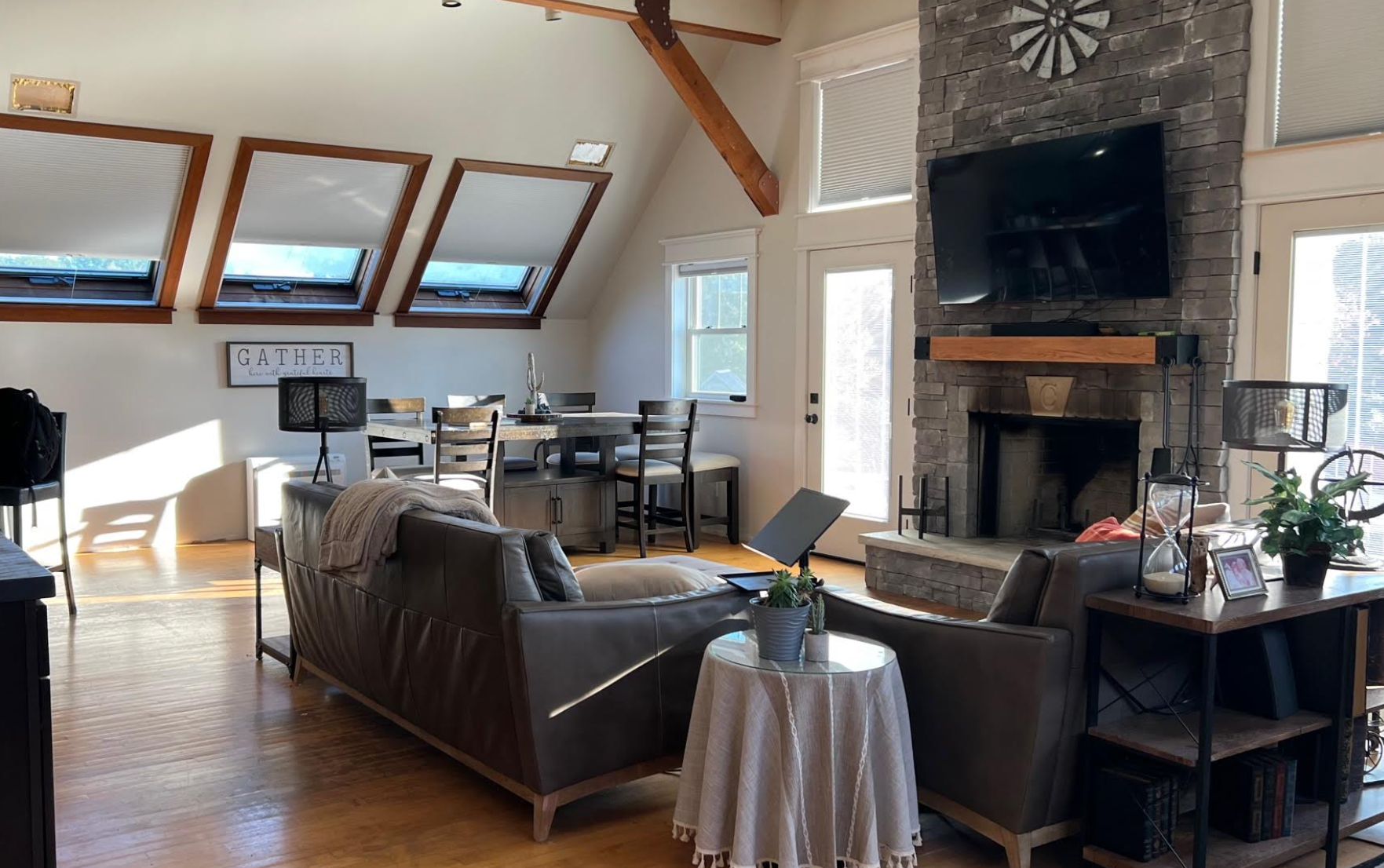
The main living and dining areas shared a single great room, but they did not operate harmoniously. Furniture placement interrupted circulation, which made everyday movement through the space feel more effortful than necessary. Storage was also insufficient for a household with frequent visitors, so hosting often required reconfiguration rather than feeling intuitive.
These issues developed gradually as decisions were made independently rather than within a larger framework, which caused small compromises to compound over time.
Before any selections were made, we focused on how the space needed to work long term. Circulation paths had to remain clear so the room could support both daily use and gatherings. Furniture choices needed to balance conversation and movement, while storage had to be integrated in a way that supported organization without overwhelming the space visually. These functional priorities guided every decision that followed.
Architectural Changes That Shifted the Space
One of the most impactful changes involved a skylight located over the kitchen peninsula, which affected how the adjacent great room functioned. While we did not redesign the kitchen itself, the skylight’s placement limited the ability to introduce pendants in the surrounding space. By removing that skylight, we created the flexibility needed for future pendant lighting, allowing the dining area to feel visually anchored rather than unresolved within the open plan.
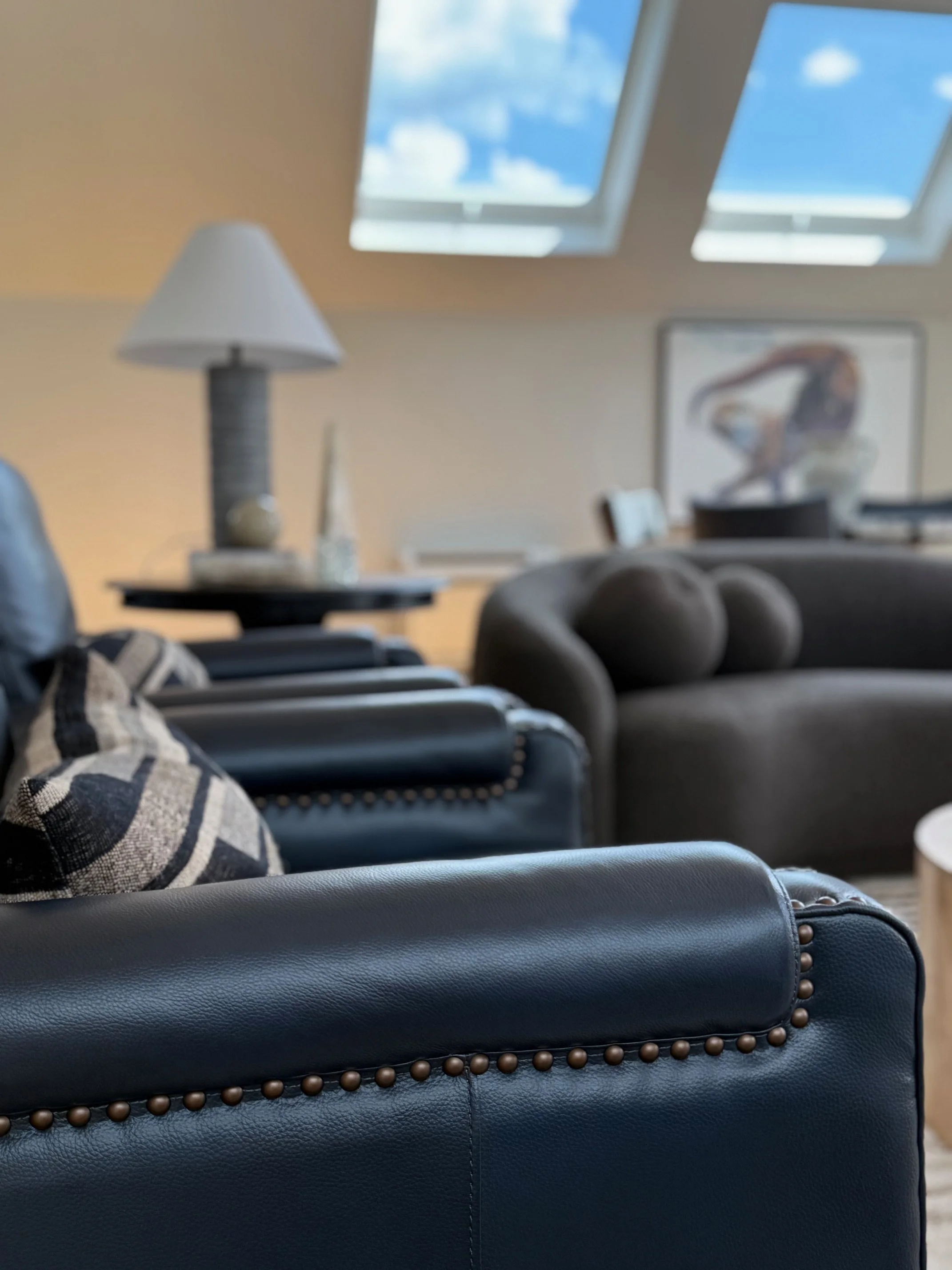
In addition to addressing the skylight, we removed the existing trimwork around the remaining openings. Rather than relying on applied trim, the openings were mudded and shaped so they felt integrated into the ceiling plane. This approach softened the architecture and reduced visual distraction, which helped the ceiling feel calmer and more cohesive throughout the space.
New baseboards were installed across the home to establish continuity, and all interior paint was reconsidered as part of a unified color story. These changes were intentionally restrained, but they mattered because they created the foundation that allowed the furnishings and lighting to work together cohesively.
Before the Renovation
Furnishings Selected With Intention
One of the homeowners’ frustrations was how often they had needed to re-shop in the past. Furniture that seemed right in isolation frequently failed once it was placed in the room, either blocking walkways or falling short during gatherings. Over time, this pattern made the space feel temporary rather than settled.
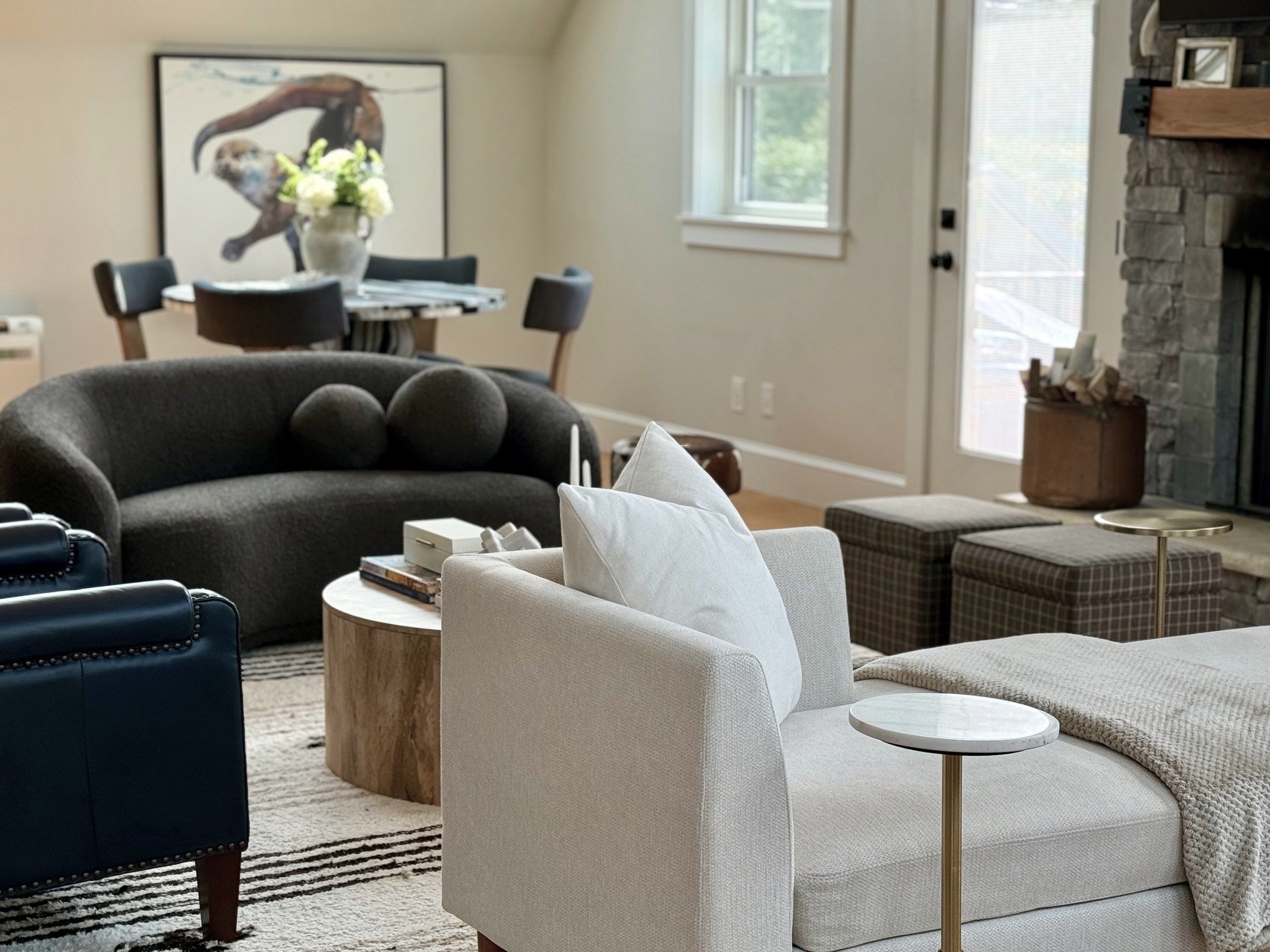
For this project, furnishings were planned as a system instead of individual pieces. Furniture scale was carefully considered so circulation paths remained clear, and layouts were designed to support everyday use as well as hosting without requiring constant adjustment. Each piece had a defined role within the room, which helped eliminate visual and functional clutter. Budget guardrails were respected by prioritizing fewer, more impactful decisions, since spreading resources thin had previously led to frequent replacements. By focusing on selections that would hold up over time, the homeowners could invest with confidence rather than anticipating future changes.
Living Room After
A Color Story That Brings Cohesion
Paint was treated as a foundational element rather than a finishing layer. The goal was to create continuity across the home so the great room felt connected instead of segmented.
The palette was intentionally restrained, which reduced visual fragmentation and supported clear sightlines across the space. This allowed furnishings, lighting, and architectural details to take the lead without competing for attention.
By establishing the color story early, paint reinforced the clarity created through layout and scale instead of being used later to correct unresolved issues.
Lighting That Defines Use and Atmosphere
Relocating the skylight allowed lighting to become a defining feature of the space. Pendants will anchor the dining area, helping organize the open plan without introducing physical divisions.
Layered lighting was incorporated to support different moments throughout the day. Ambient, task, and decorative lighting were coordinated with furniture placement and ceiling details, which ensured the room felt cohesive rather than pieced together as needs changed.
Dining Area After

The Result
Six months after the start of the project, the House of Thistle feels resolved. The great room supports the family’s lifestyle without requiring constant reworking, and hosting now feels natural rather than effortful. Storage functions quietly in the background, which allows the space to stay organized without drawing attention to itself.
When decisions are made in the correct order and guided with a long-term perspective, the result is a home that feels settled instead of provisional. That sense of ease is often the clearest sign that the design process worked.